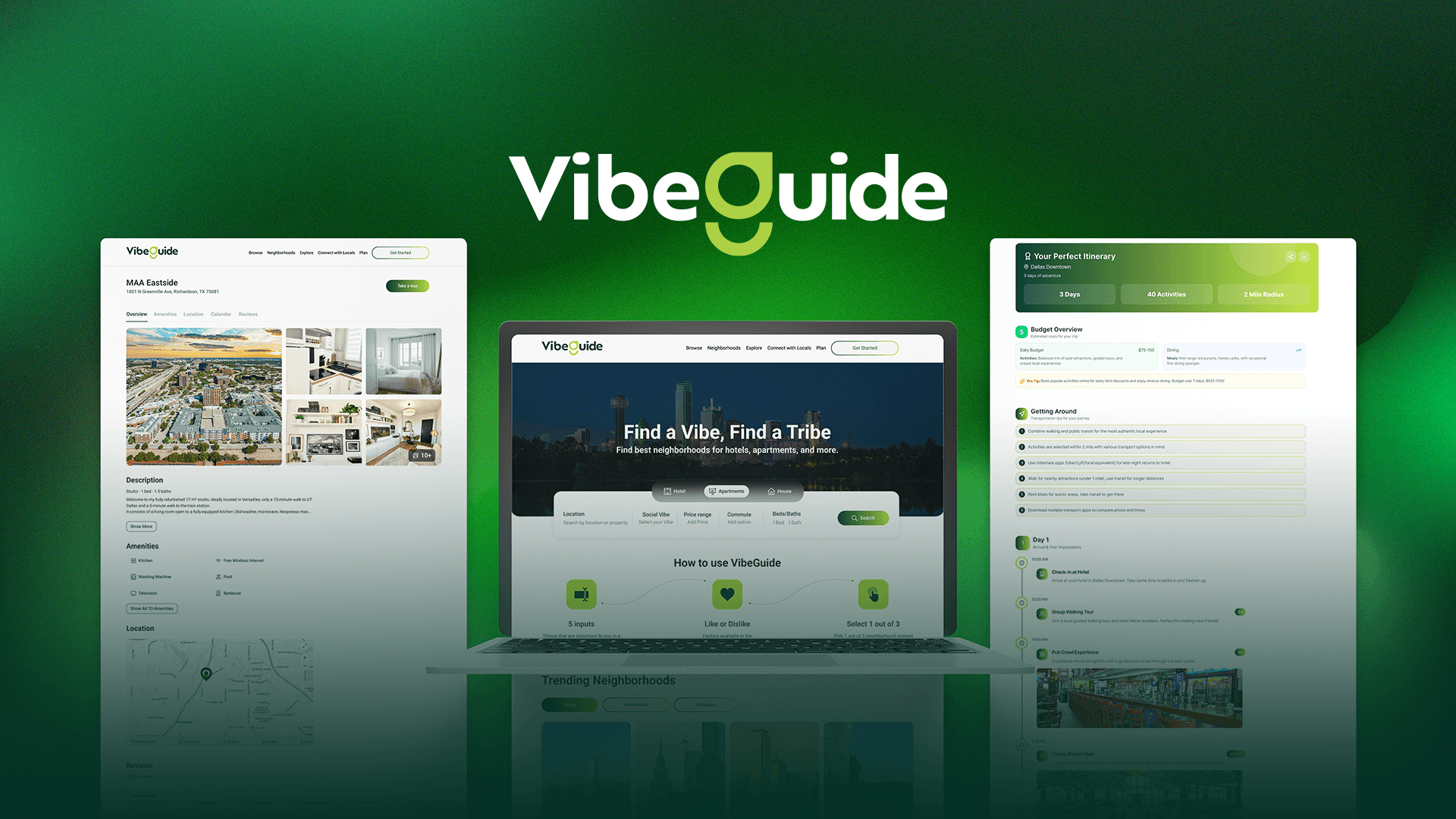
A real-time, interactive product designed to help newcomers to DFW find a neighborhood with apartments, hotels, and homes that matches their personal vibe.
Timeline: 15 weeks
End-to-end product design — neighborhood discovery for DFW newcomers
Intro
Timeline: 15 weeks
Problem & statement
How might we help people choose a neighborhood with confidence they can act on in a week.
My roles & responsibilities
UX Research Strategy | Design System | Ideation & testing | Solving Problem
Design process
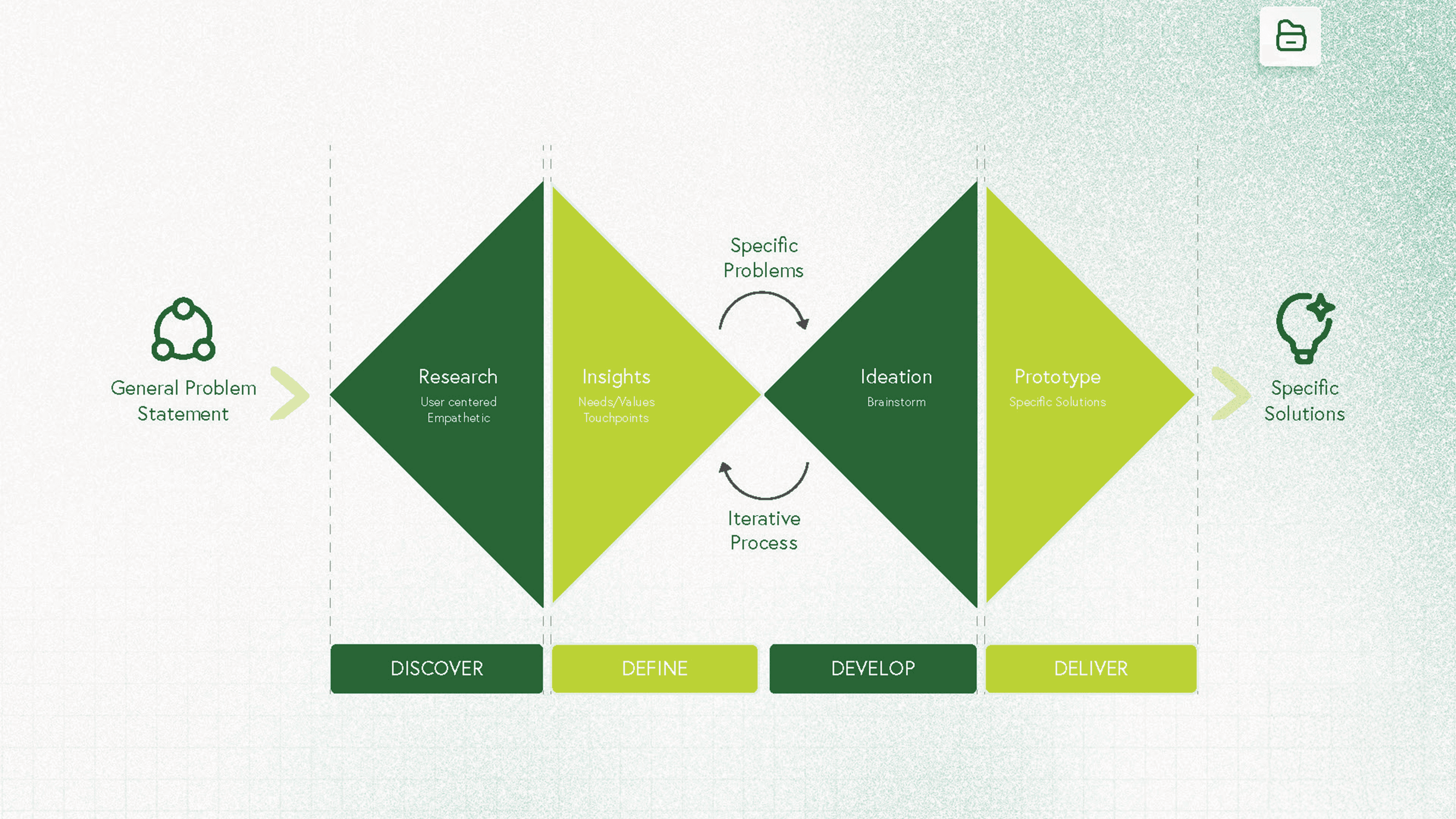
I used the Double Diamond method to first discover why newcomers to DFW struggle to choose a neighborhood. Research revealed the core gap: people can find units and prices online, but have no reliable signals for safety feel, commute reality, or neighborhood vibe. I defined this as the "neighborhood-fit gap," then ideated, prototyped, and tested solutions — ultimately delivering a preference-driven product that reduces cognitive load through three explainable, personalized recommendations.
Research
DFW metroplex is the most populous area in Texas and third in the United States. Approximately 178k new people moved in with 27m of annual visitors impacting 10.5B of economy just last year.
Journey map
Here are some possible users for vibeguide. Weekender, who enjoys vacation, Long term visitor, who stays for a extended period of time, and home seeker, who just wants to settle down.
Ideation
Long-term visitor coming to Dallas. An international grad student admitted to UT Dallas who loves basketball.
Solution
Five inputs capture the real drivers without friction. Quick like/dislike flags non-negotiables fast. Showing three explainable neighborhoods reduces overload and speeds confident booking.
Design
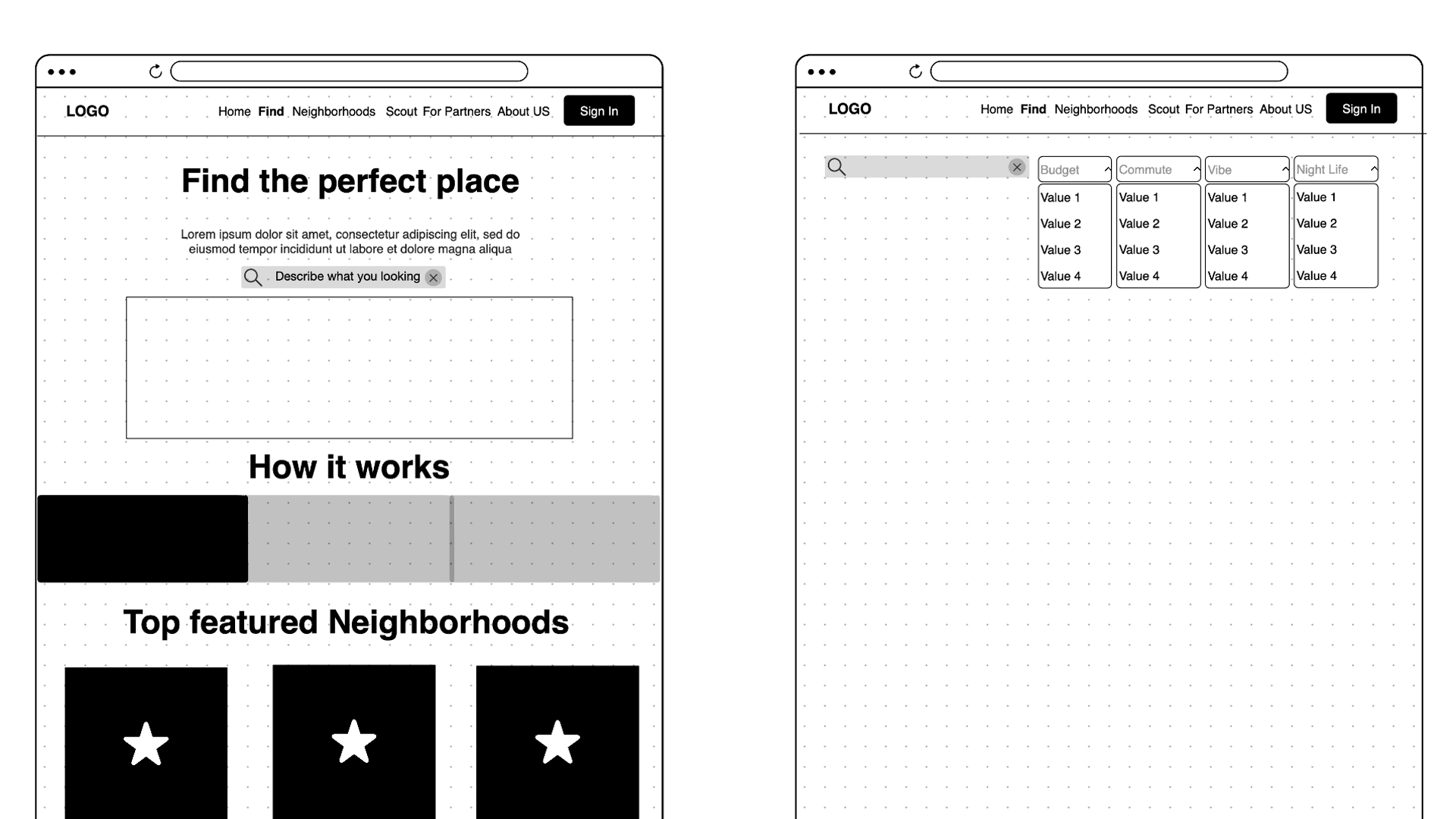
Exploring Initial Concepts: Paper Prototypes and Sketches for vibeguide.
Design
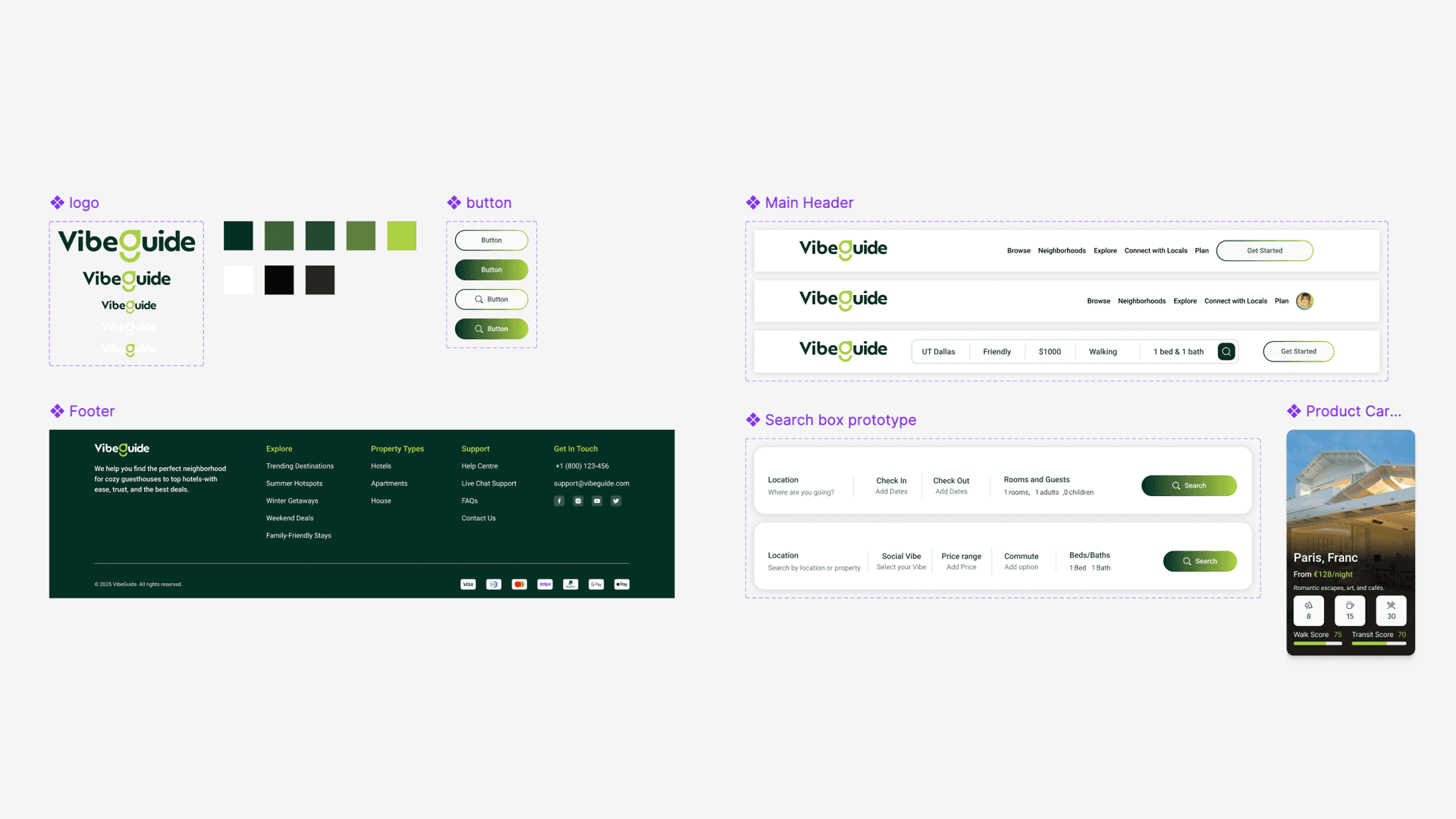
Building a Cohesive Foundation: A High-Fidelity Design System for Interface Consistency and look & feel of the product.
Design
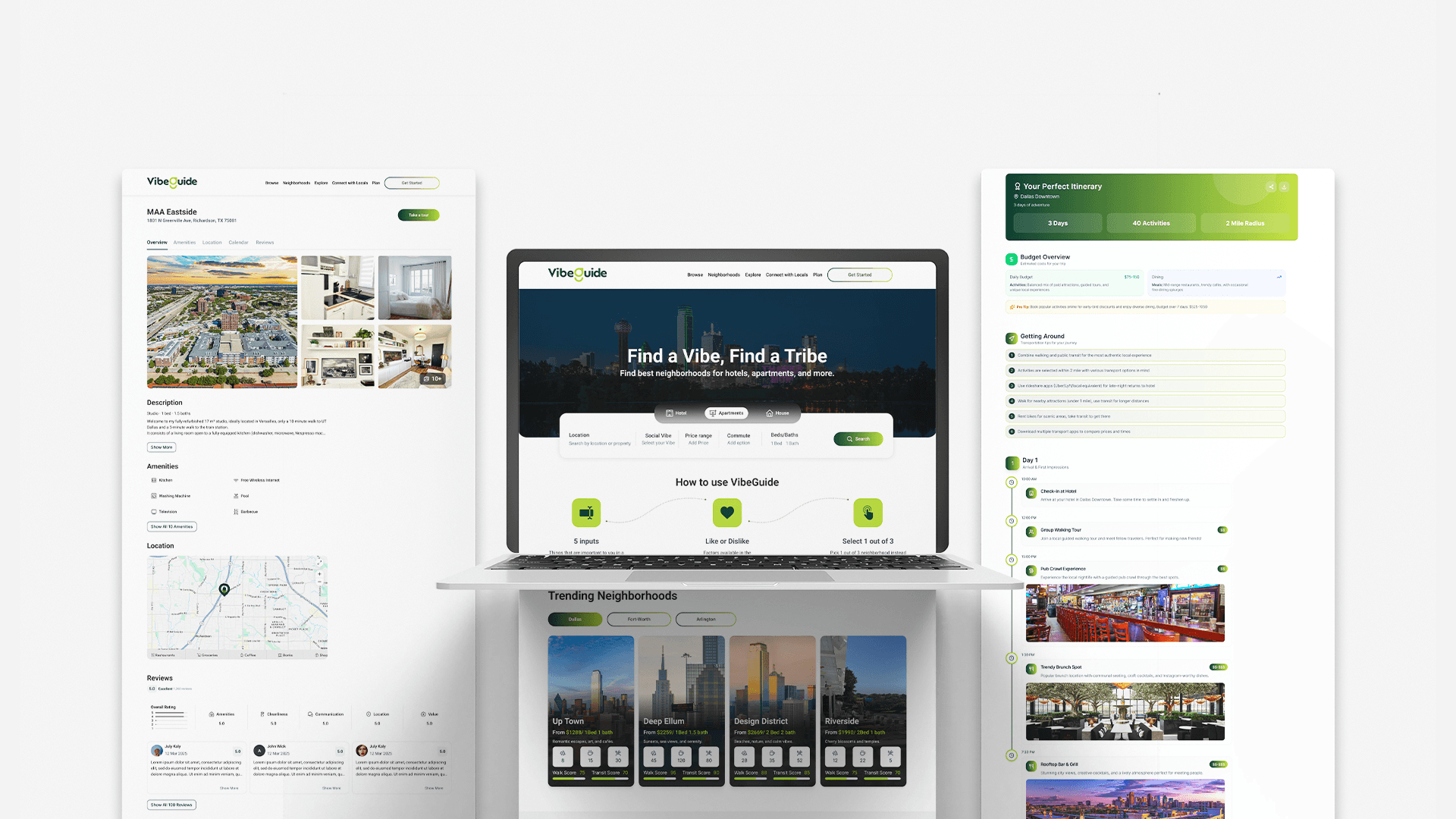
The high-fidelity UI for VibeGuide is built on the design system created for this product. Each screen minimizes friction: five structured lifestyle inputs capture user priorities, a like/dislike mechanism flags non-negotiables quickly, and results surface three neighborhood recommendations with clear tradeoff signals — walkability, transit, noise, and amenity scores. The complete flow was validated through usability testing and iterated based on participant feedback.
Next step 1
Launch VibeGuide to 50 users across three segments—weekenders, long-term visitors, home seekers—in 4 Dallas neighborhoods.
Next step 2
Get buy-in from partners like VisitDallas and the Dallas Regional Chamber to secure their support because they already attract visitors, talent, and companies. Their reach and credibility can accelerate adoption.
Next step 3
Validation is needed to prove the design actually helps users decide faster and book with confidence. Updates turn evidence into improvements, reducing drop-offs and focusing effort on what works.
Next step 4
Partner with neighborhood groups through a 90-day co-branded pilot that showcases their strengths, tracks referrals to tours and bookings, and shares clear impact metrics. Monthly reviews will tune content and perks so the guide drives qualified renters and visitors.
Potential features
Vision: A white-label platform for cities worldwide VibeGuide is more than a DFW tool. The same framework — structured lifestyle inputs, explainable tradeoff signals, personalized recommendations — could be licensed to any city, tourism board, or real estate platform globally. It shifts how people relate to urban spaces: from searching for a unit to finding a place that fits how they live, work, and play.