Abstract solo flower

Glidance

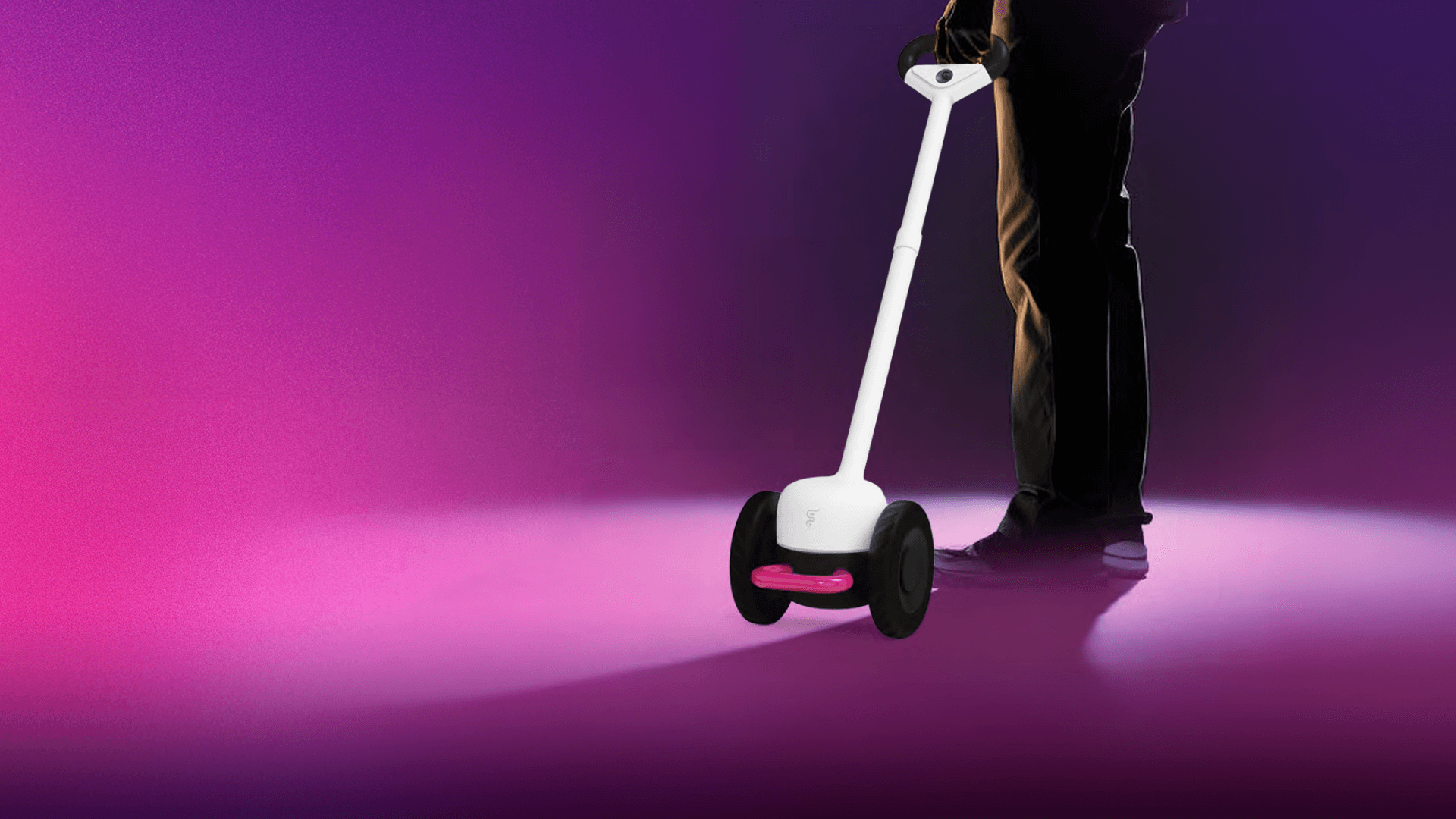
A design case study for an independent mobility company to help them with reaching blind & low-vision individuals.

Intro

Designing for the 98% Within the Blind and Low Vision Community

This project focused exclusively on the Blind and Low Vision (BLV) population — particularly the 98% who are not connected to formal BLV communities and often do not use traditional mobility aids. Rather than designing a new device, we examined a deeper challenge: How do we increase awareness, trust, and early engagement within the BLV ecosystem? We concentrated on the Awareness Horizon (1–3 years) — designing strategic pathways that reduce stigma and build confidence among BLV individuals before adoption barriers solidify.
Problem & statement

Blind and Low Vision (BLV) individuals—especially those not connected to formal support systems—struggle to feel safe, confident, and independent in their daily lives, as existing assistive solutions are often stigmatized, inaccessible, unaffordable, or not designed around their real-world needs and experiences.

How might we design an accessible, trustworthy, and stigma-free solution that enables Blind and Low Vision (BLV) individuals to navigate daily life with greater confidence, safety, and independence?

My roles & responsibilities

Strategic Product Design Team | UX Research | Systems Thinking

As a team, we: Conducted in-depth interviews with BLV individuals and sighted supporters Analyzed emotional, behavioral, and ecosystem barriers Mapped the BLV journey from diagnosis to mobility adoption Generated 100+ ideas and refined 11 strategic concepts Structured solutions across three long-term horizons For this case study, we present only the Awareness phase due to NDA restrictions.

Design process

User experience research

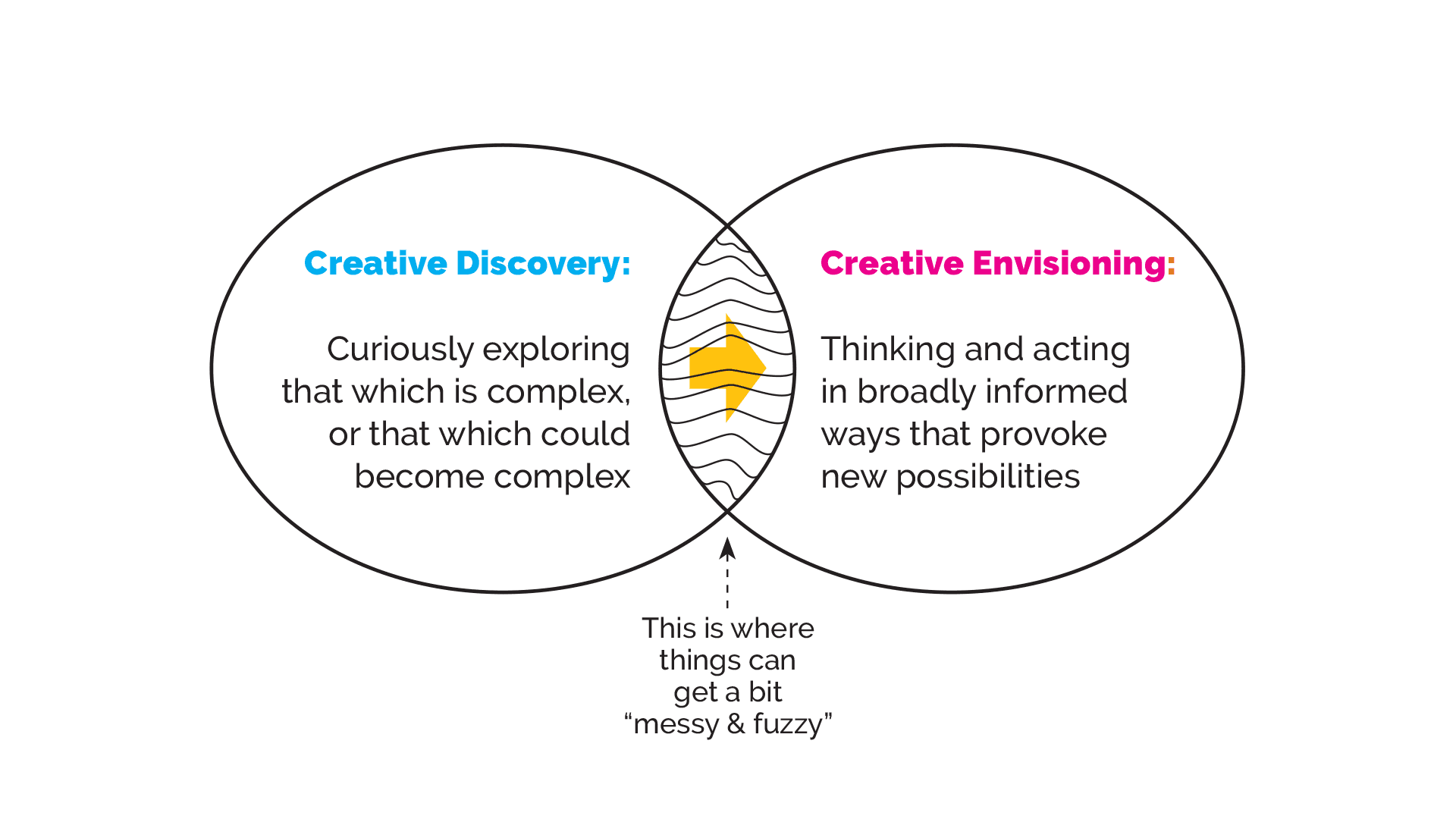
The first of these is creative discovery, and the second is creative envisioning. Creative discovery involves a cyclic, iteratively guided1 and heuristically informed and evaluated thinking and making process. Creative discovery is sometimes referred to as the “fuzzy front-end” of the design process, and often needs to be guided with the following idea from W.E.B. Du Bois in mind: “If you do what you have always done, you’ll get what you’ve always gotten.”

Research

Participant Observation 25 Sources | 15 Interviews

Our research was extensive. With curiosity as our guide, we examined the BLV community from multiple perspectives. 25 sources from Academic literature, news articles, and medical journals & 15 interviews with 10 BLV individuals, 4 sighted support, and 1 topic expert.

Journey map

The BLV Emotional Transition Curve

We mapped the BLV journey from vision loss onset through identity adjustment, resistance to assistive tools, increased caregiver reliance, and delayed mobility adoption. Our key finding: the diagnosis and early-adjustment phase is the most critical intervention point for building trust and shaping long-term independence.

Ideation

100+ ideas generated. 11 concepts developed.

We ideated across: Healthcare integration within BLV pathways Community outreach inside the BLV ecosystem Trust-building initiatives Awareness campaigns designed specifically for BLV individuals Concepts were evaluated based on: Emotional safety Accessibility Ecosystem scalability Long-term positioning within the BLV market

Solution

Awareness as the First Mobility Intervention

We reframed awareness not as marketing, but as ecosystem design within the BLV community. Our goal was to normalize mobility conversations, introduce innovation early in the vision-loss journey, reduce stigma around assistive aids, and build trust before adoption decisions arise—positioning awareness as the foundation for long-term independence.

Design

Caregiver-inclusive awareness kits

Accessible educational resources designed for both BLV individuals and their caregivers, providing clear guidance on mobility options, emotional adjustment, and support pathways. By equipping caregivers with informed tools, these kits reduce fear and overprotection while fostering trust and confident decision-making early in the journey.

Design

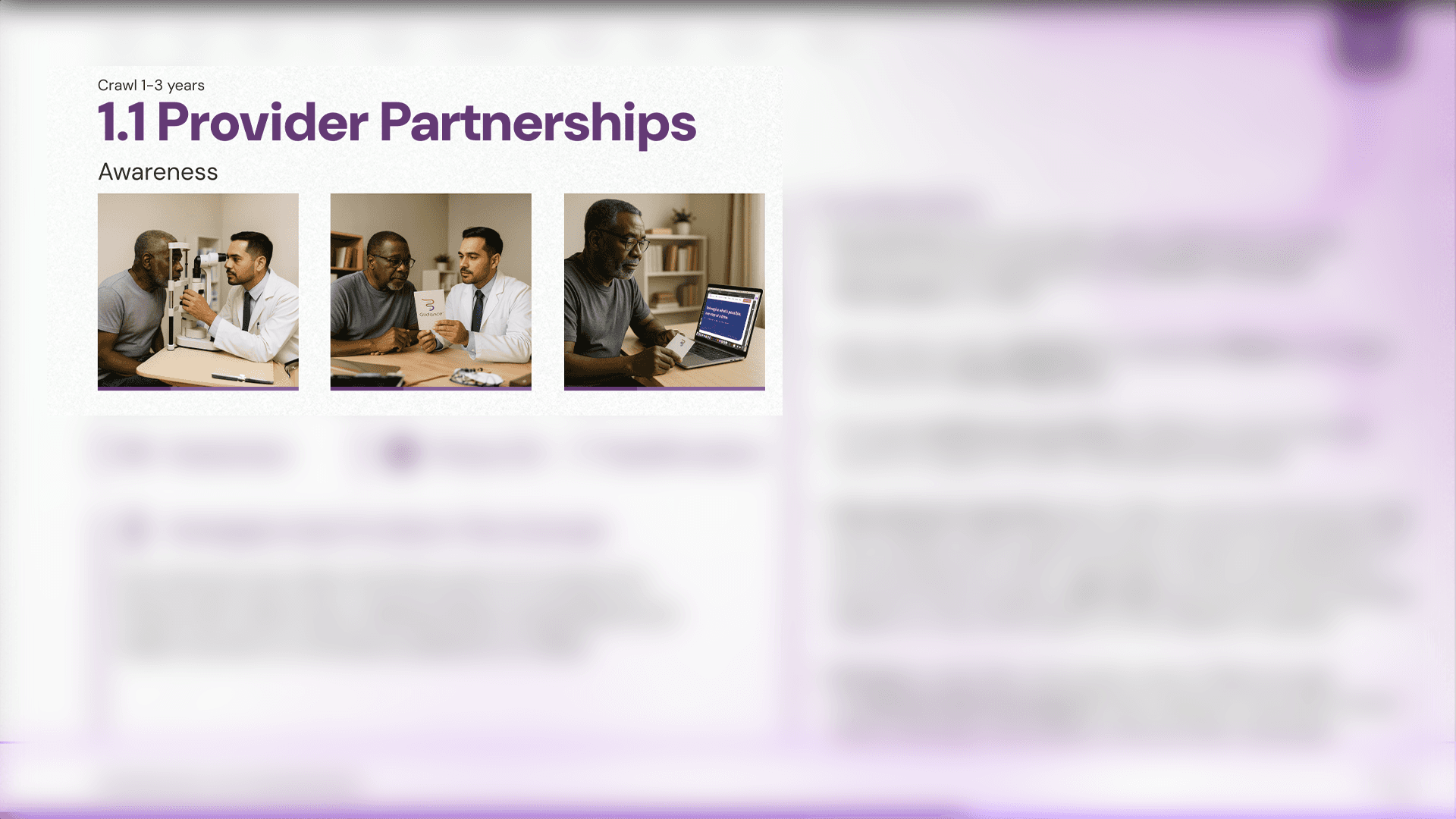
Early exposure to mobility innovation within clinical settings

Introducing mobility solutions at the point of diagnosis or during early vision care consultations. By integrating accessible, audio-first information and demonstrations within clinics, we create a trusted environment where BLV individuals can learn about available innovations early—reducing stigma and shaping informed, confident decision-making from the start.

Design

Structured information pathways for newly diagnosed BLV individuals

Provide clear, step-by-step guidance following diagnosis, outlining mobility options, support resources, and next actions. This reduces overwhelm, prevents misinformation, and ensures individuals move forward with confidence rather than confusion during early adjustment.

Next step 1

Measure BLV Awareness Gaps

Quantify perception, trust, and stigma levels within the BLV community.

Next step 2

Pilot Early Exposure Programs

Partner with vision clinics and rehabilitation centers to test awareness strategies.

Next step 3

Build BLV Trust Architecture

Create ambassador networks and testimonial ecosystems within the BLV community.

Next step 4

Establish Category Leadership in BLV Mobility

Position the solution as the default mobility choice across the BLV ecosystem.

Potential features

Audio-first onboarding content Caregiver education resources Referral networks within BLV communities Accessible product demonstration experiences Community validation loops

Discuss a role

Endeavoring toward a better User Experience.

Have an idea you want to bring to life? Let’s shape it into something you’re proud to show.

Discuss a role

Endeavoring toward a better User Experience.

Have an idea you want to bring to life? Let’s shape it into something you’re proud to show.

Discuss a role

Endeavoring toward a better User Experience.

Have an idea you want to bring to life? Let’s shape it into something you’re proud to show.